October 21, 2024
Laura and I had a long layover scheduled in Seoul, South Korea. I was pleasantly surprised to find out that there were no visa requirements for Canadians and so we schemed how we could leave the airport to go see some new birds. Neither of us had explored this part of the world before and so even the common birds would be new.
I reached out to Birding Korea as they regularly accommodate "layover birding" from the Seoul airport. However, I was dismayed to see their quote was 650 USD to pick us up from the airport at 6 AM, take us birding for the day, and drop us back off in the afternoon. I also work as a fellow birding guide, so I understand the value that guides can provide and I also realize that you pay a certain price to have this expertise. But I've never been quoted a price even remotely as high as this. Obviously this company gets enough business regardless, so it must be a viable strategy. Or perhaps the guide didn't feel like guiding us that day, so they gave us a ridiculous price to make it worth their while? Regardless, Laura and I weren't going to pay that. We figured that we could find some birds on our own by taking the metro for a small fraction of the price!
 |
| Oriental Magpie - Gangseo Wetland Eco-Park, Seoul-T'ukpyolshi, South Korea |
And that is just what we did. It took a bit of time but eventually we were able to figure out payment for the metro (strangely, none of the machines accept card and so we had to take out cash). I had researched a few decent looking parks not far from one of the metro lines. We settled on Gangseo Wetland Eco-Park and braved rush hour pedestrian traffic on the metro. By 8:30 AM, we had arrived.
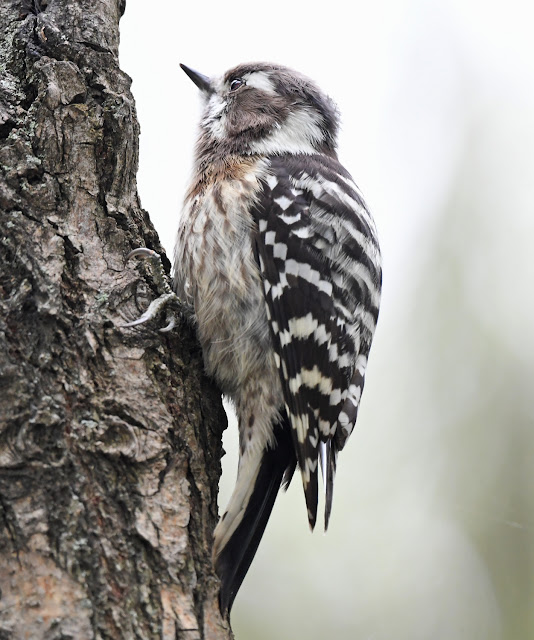 |
| Japanese Pygmy Woodpecker - Gangseo Wetland Eco-Park, Seoul-T'ukpyolshi, South Korea |
We emerged from the metro station and were met by autumn in the northern hemisphere. It was familiar and comforting, and quite a contrast to the Bornean jungles we had just departed. There was something about the cool autumn breeze, the rustling of leaves just starting to change colour, the scent of the forest and the sounds of gulls and corvids off in the distance that made it feel like Canada in early fall. Even some of the weedy plants beside the road were familiar enough (the most common aster was Symphyotrichum pilosum, which is common where I live in Canada).
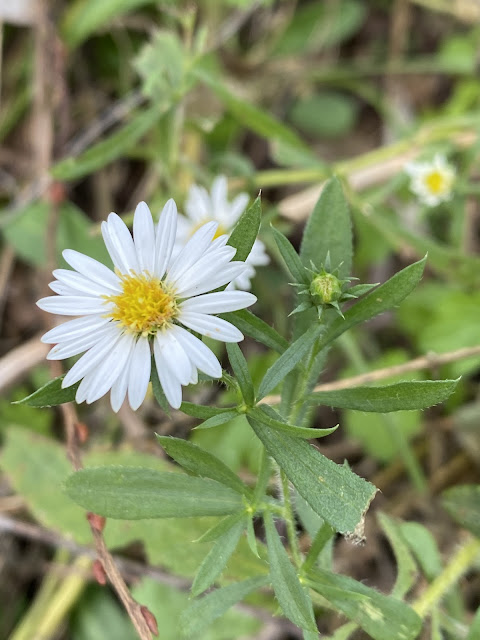 |
| Symphyotrichum pilosum - Gangseo Wetland Eco-Park, Seoul-T'ukpyolshi, South Korea |
But of course, a glance at a street sign, a vehicle or even a closer inspection of those gull and and corvid sounds made it clear that we were in South Korea and not Canada. It was a little strange to be somewhere so familiar yet foreign at the same time.
We quickly shook off the cobwebs from our overnight flight and made the thirty minute walk from the subway station to the park. We ventured over to an observation platform overlooking the Han River. I was glad that I had my scope with me; the tripod was in my checked bag that remained at the airport and so I rested it on the railing for stability.
 |
| Spot-billed Ducks - Gangseo Wetland Eco-Park, Seoul-T'ukpyolshi, South Korea |
The Spot-billed Duck was one of several guaranteed lifers here. This is quite an attractive duck and we came away with excellent views of many of them. It may be an abundant duck in this part of the world, but it was one that I was happy to share a moment with for the first time.
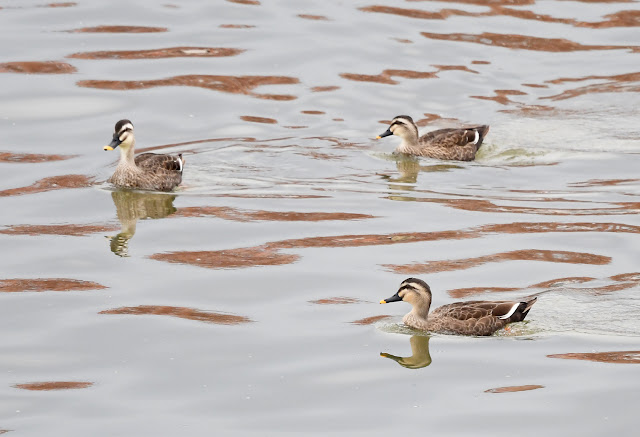 |
| Spot-billed Ducks - Gangseo Wetland Eco-Park, Seoul-T'ukpyolshi, South Korea |
Many of the birds here fill similar niches to "our" birds back home, but with some minor differences. Instead of Double-crested Cormorants, we watched Great Cormorants flying up and down the river. Instead of Ring-billed Gulls, there were far superior Black-tailed Gulls. Gray Herons replaced Great Blue Herons, while Vega and Mongolian Gulls were present instead of American Herring Gulls.
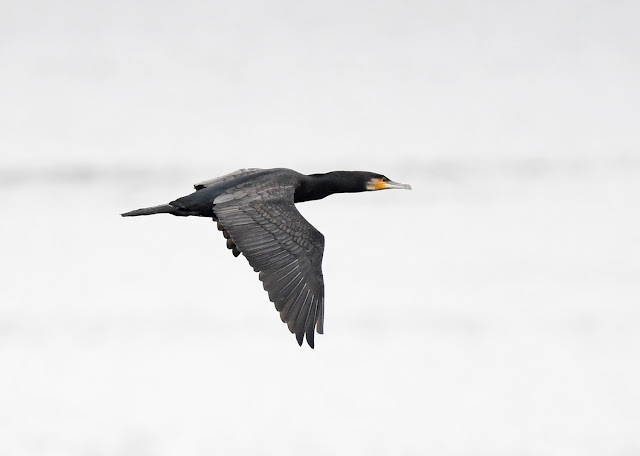 |
| Great Cormorant - Gangseo Wetland Eco-Park, Seoul-T'ukpyolshi, South Korea |
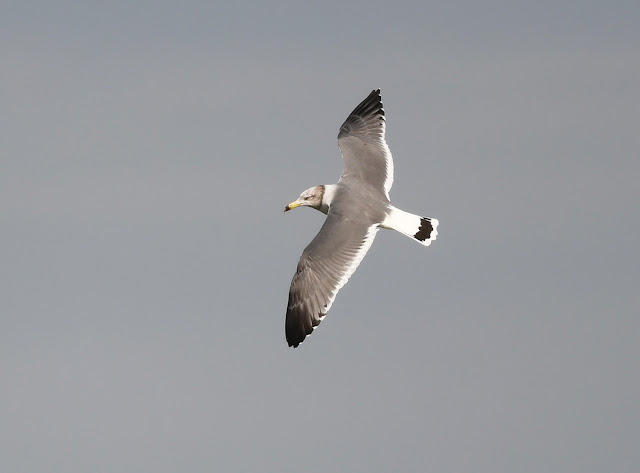 |
| Black-tailed Gull - Gangseo Wetland Eco-Park, Seoul-T'ukpyolshi, South Korea |
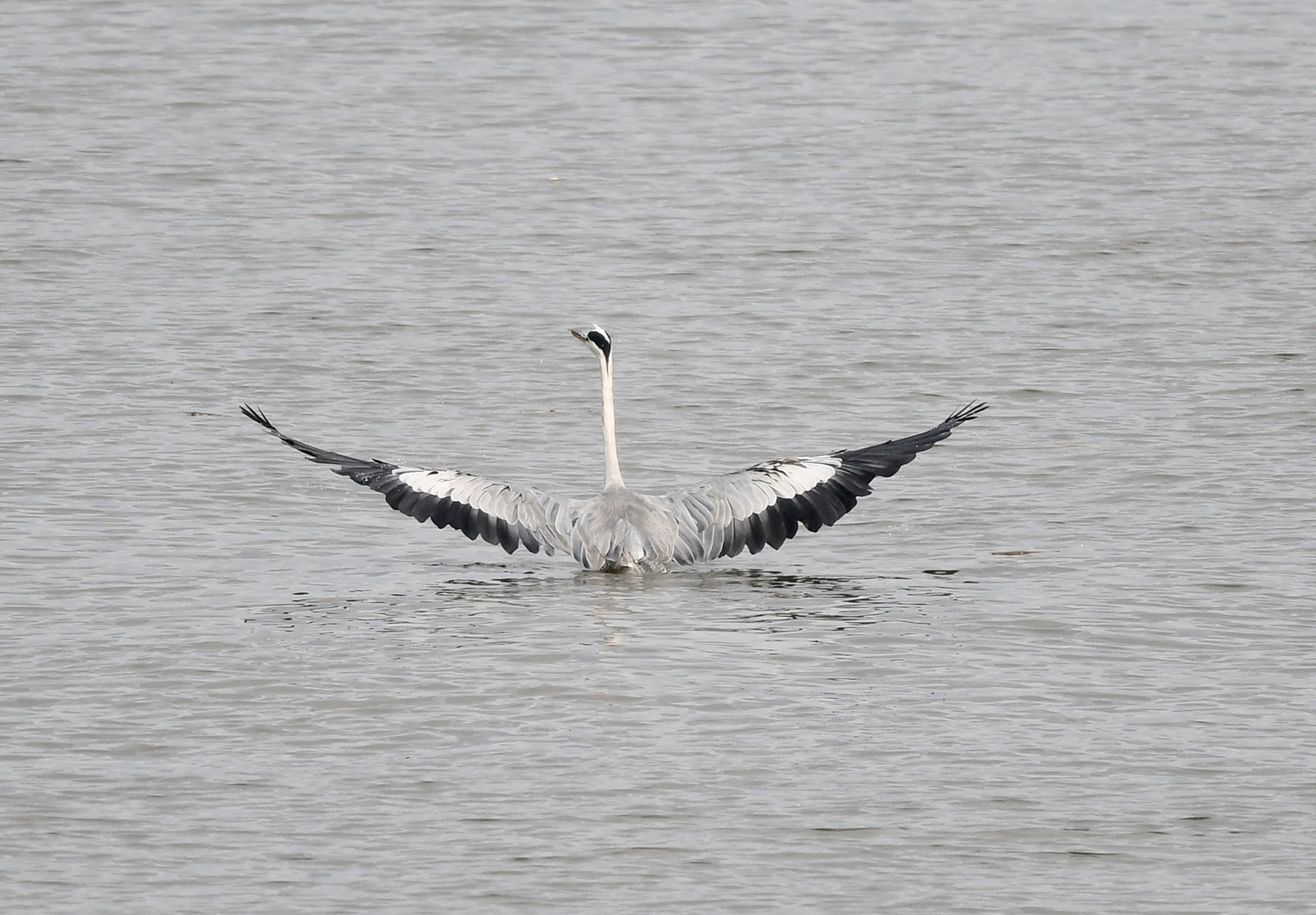
This Gray Heron was swimming in the middle of the river, a behaviour that I don't think I have witnessed before.
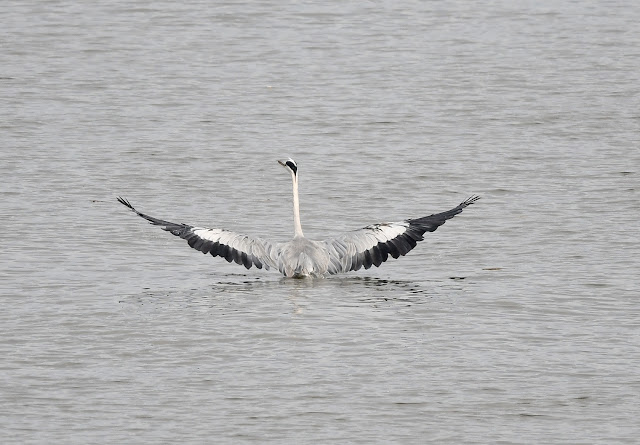 |
| Gray Heron - Gangseo Wetland Eco-Park, Seoul-T'ukpyolshi, South Korea |
While scoping the river a group of five Tundra Bean-Geese flew over, while some dedicated scoping finally produced a group of Common Pochards, a Tufted Duck and a Great Crested Grebe.
 |
| Tundra Bean-Geese - Gangseo Wetland Eco-Park, Seoul-T'ukpyolshi, South Korea |
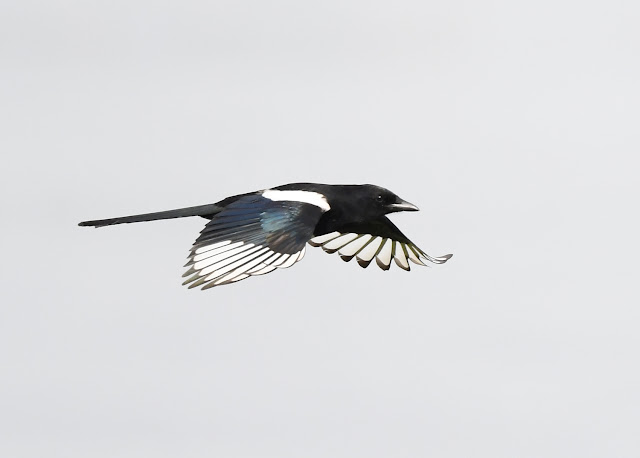 |
| Oriental Magpie - Gangseo Wetland Eco-Park, Seoul-T'ukpyolshi, South Korea |
Laura and I turned back inland and focused on the landbirds in the woodland patches along the river. This was exciting as almost half of the species were lifers!
Brown-eared Bulbul is a common and conspicuous resident in Seoul and we had fun observing our first ones.
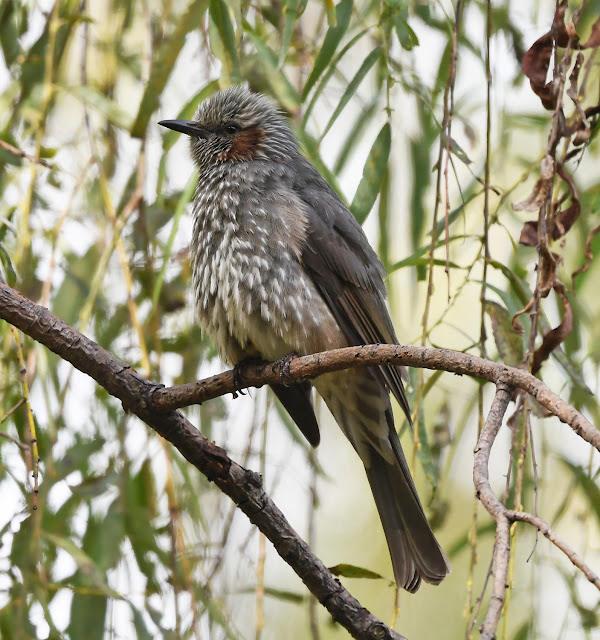 |
| Brown-eared Bulbul - Gangseo Wetland Eco-Park, Seoul-T'ukpyolshi, South Korea |
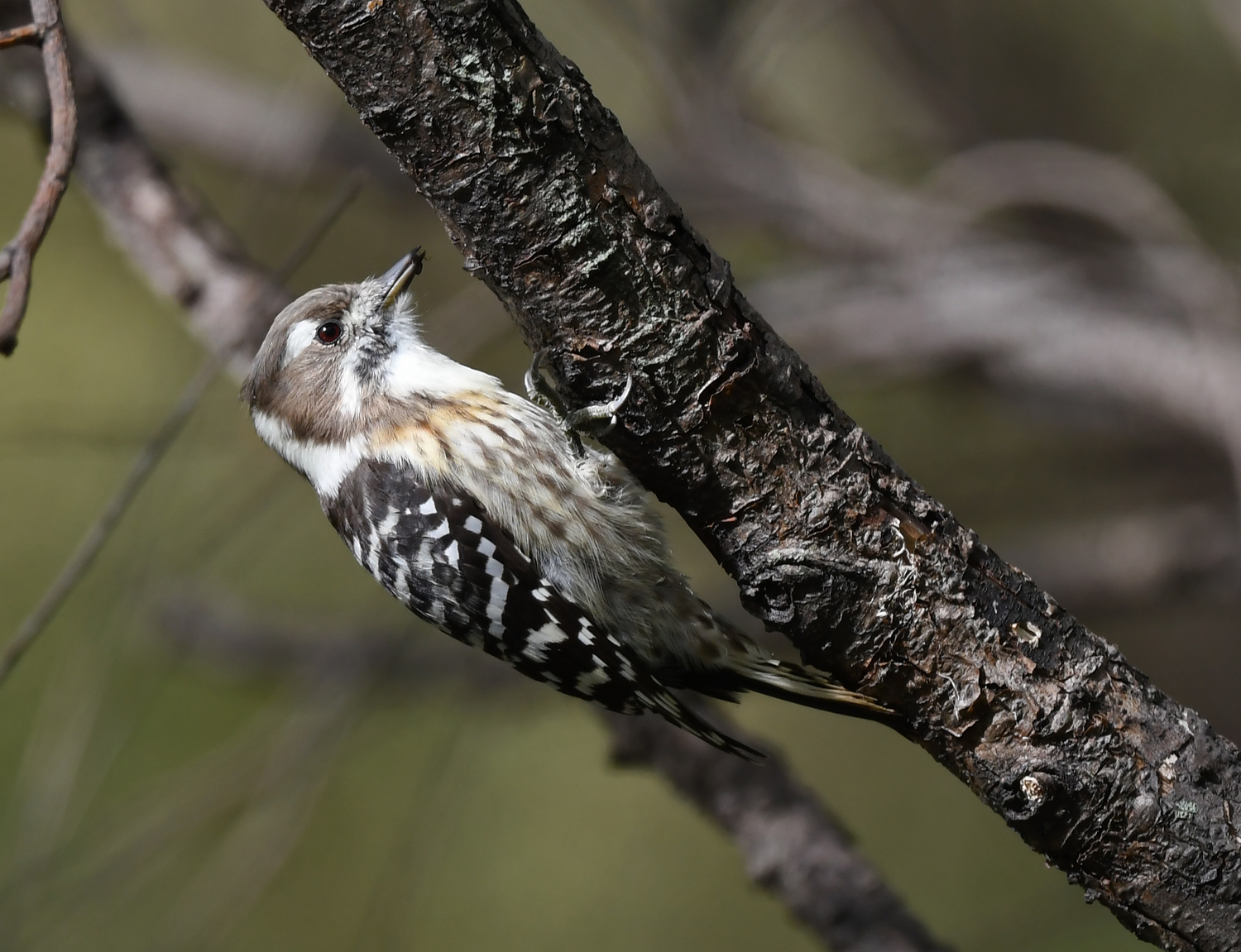
Tits and woodpeckers were quite common. We found dozens of Asian Tits, a flock of Long-tailed Tits and a small group of Marsh Tits. Woodpecker-wise, we noted Gray-capped Pygmy Woodpecker, Japanese Pygmy Woodpecker, Great Spotted Woodpecker and Gray-headed Woodpecker.
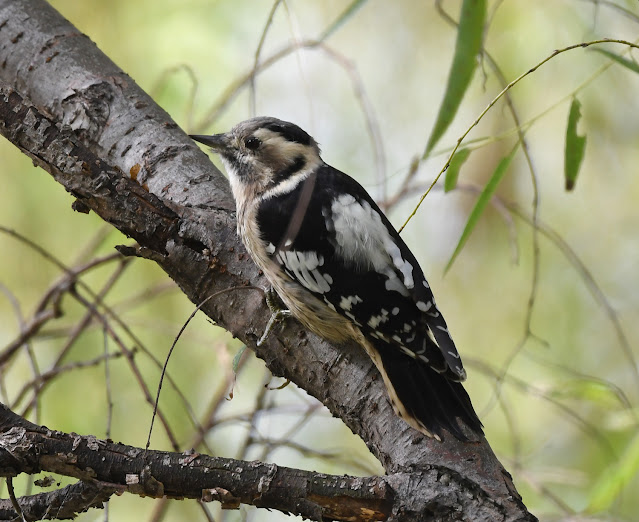 |
| Gray-capped Pygmy Woodpecker - Gangseo Wetland Eco-Park, Seoul-T'ukpyolshi, South Korea |
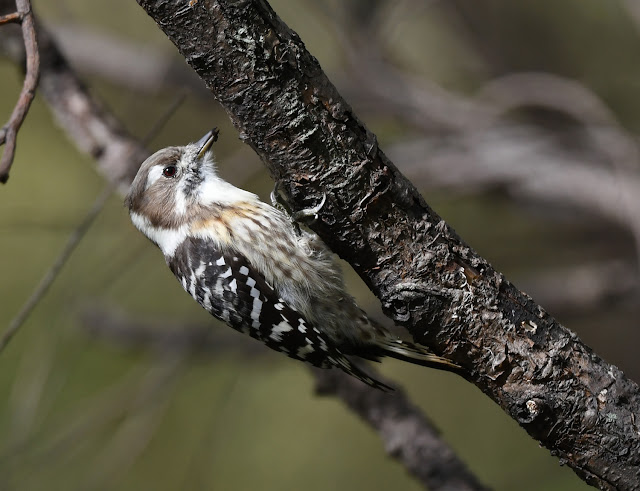 |
| Japanese Pygmy Woodpecker - Gangseo Wetland Eco-Park, Seoul-T'ukpyolshi, South Korea |
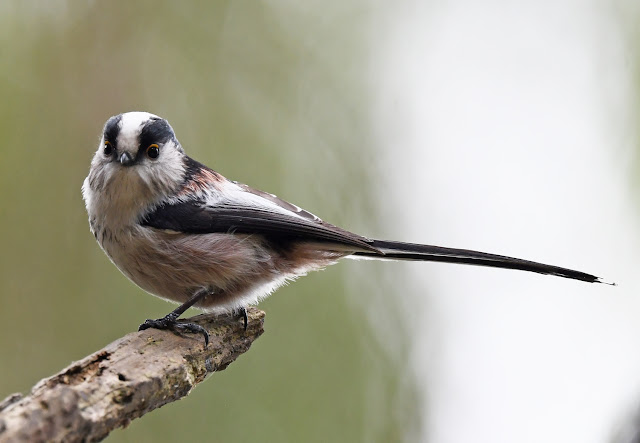 |
| Long-tailed Tit - Gangseo Wetland Eco-Park, Seoul-T'ukpyolshi, South Korea |
The day's highlight for me was finding and sorting through quite a few buntings (genus Emberiza). Here there is an interesting mix of resident and wintering species, and at this time of year they are in their nondescript winter plumages. In total we found over twenty buntings of four species. Black-faced was the dominant species, along with a few Tristram's Buntings and a single Reed Bunting and Rustic Bunting.
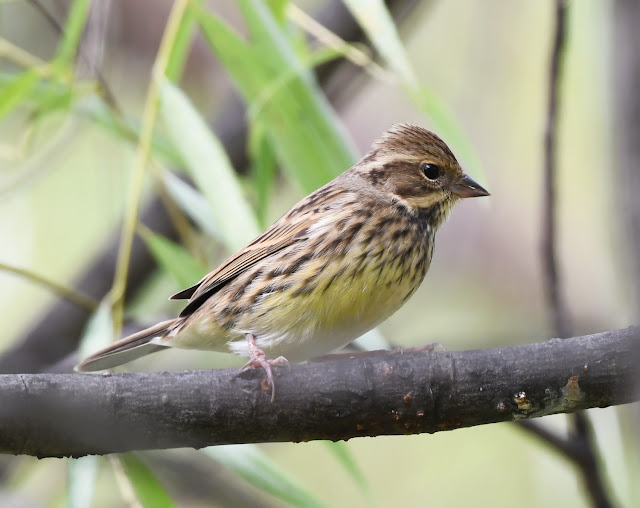 |
| Black-faced Bunting - Gangseo Wetland Eco-Park, Seoul-T'ukpyolshi, South Korea |
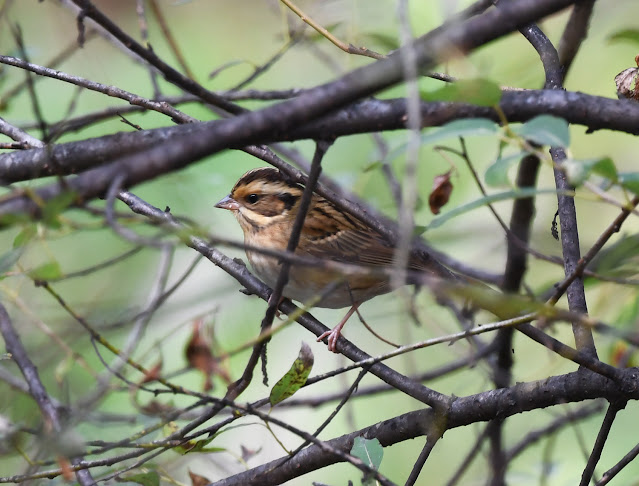 |
| Tristram's Bunting - Gangseo Wetland Eco-Park, Seoul-T'ukpyolshi, South Korea |
The default dove type here is the Oriental Turtle-Dove.
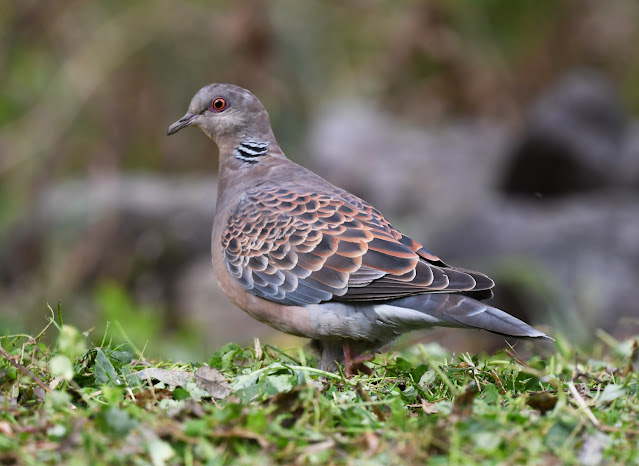 |
| Oriental Turtle-Dove - Gangseo Wetland Eco-Park, Seoul-T'ukpyolshi, South Korea |
This insect was very exciting for me, as I immediately knew what it was; a highly invasive species called the Spotted Lanternfly which has recently started to colonize Ontario. They are invasive here in South Korea as well; their native range includes parts of China and Vietnam.
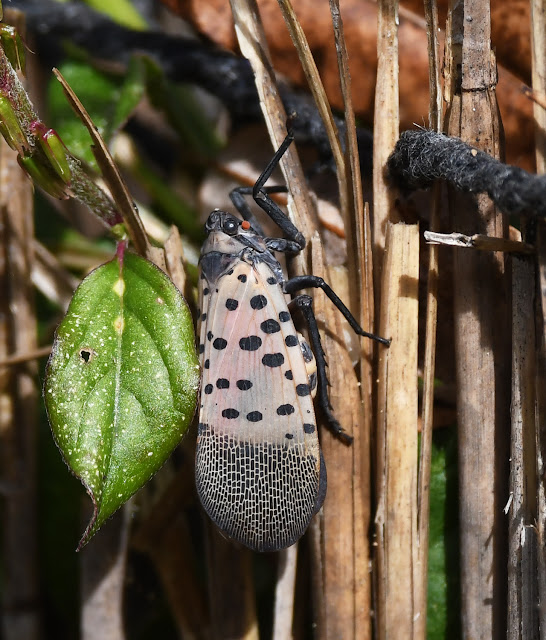 |
| Spotted Lanternfly (Lycorma delicatula) - Gangseo Wetland Eco-Park, Seoul-T'ukpyolshi, South Korea |
As the morning progressed the occasional sprinkles of rain ended, and a bit of sun peeked through the clouds. This improved my photography efforts, while it also helped us find several species of butterflies and dragonflies.
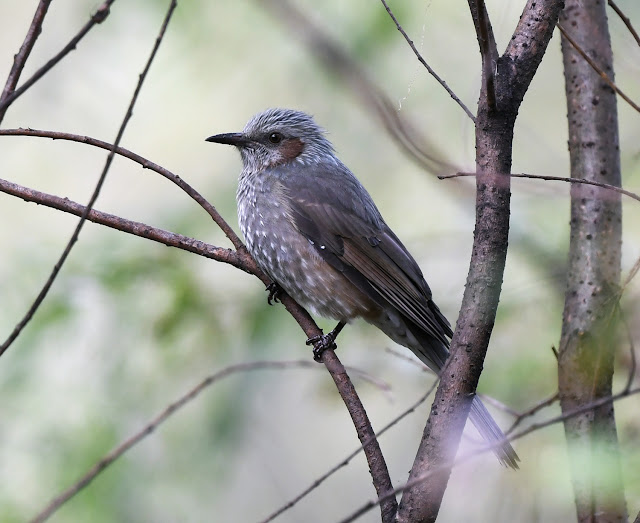 |
| Brown-eared Bulbul - Gangseo Wetland Eco-Park, Seoul-T'ukpyolshi, South Korea |
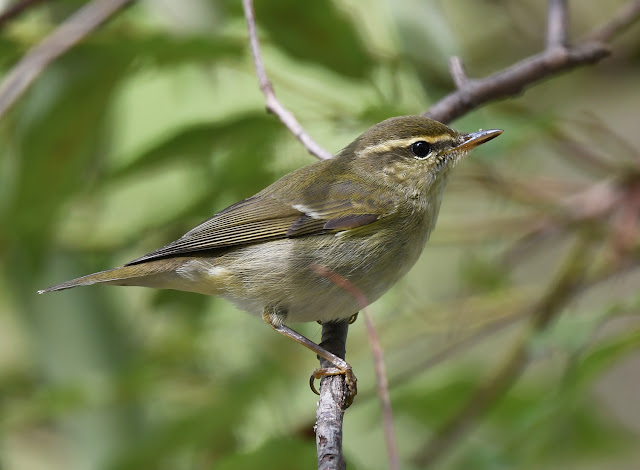 |
| Arctic Warbler - Gangseo Wetland Eco-Park, Seoul-T'ukpyolshi, South Korea |
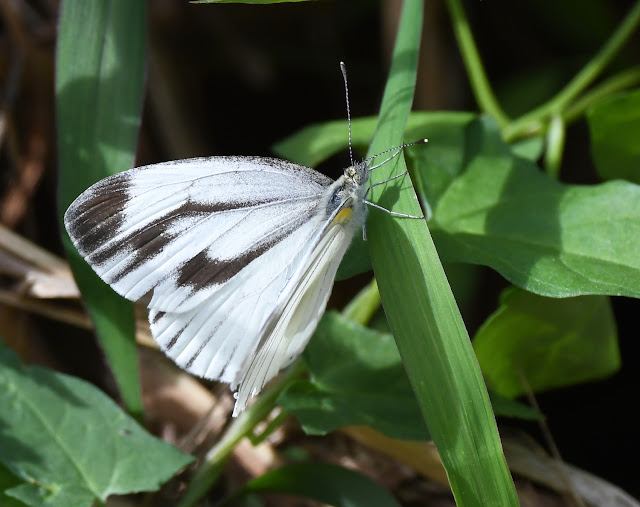 |
| Asian Green-veined White (Pieris melete) - Gangseo Wetland Eco-Park, Seoul-T'ukpyolshi, South Korea |
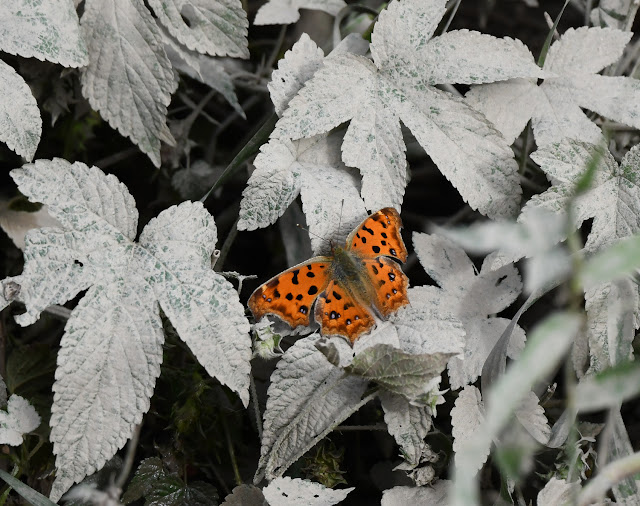 |
| Asian Comma (Polygonia c-aureum) - Gangseo Wetland Eco-Park, Seoul-T'ukpyolshi, South Korea |
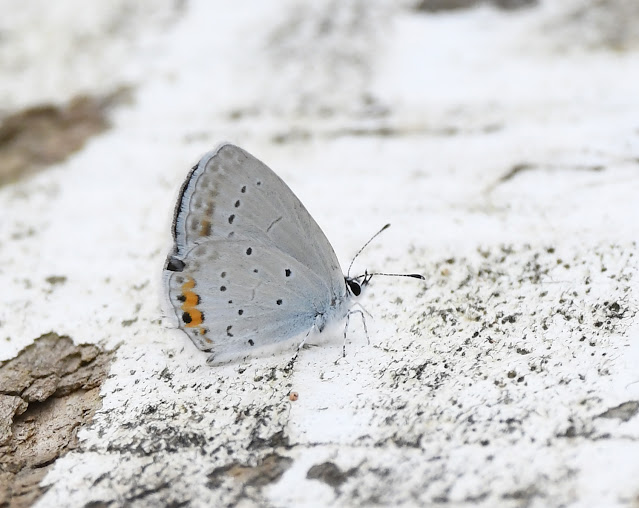 |
| Short-tailed Blue (Cupido argiades) - Gangseo Wetland Eco-Park, Seoul-T'ukpyolshi, South Korea |
Laura and I lingered in this area for an extra few minutes. I love this sign! It reads "The Area Where Snakes Appear". If only it was that easy...
We found a nice mixed flock of birds in this area that contained mostly buntings but also an Olive-backed Pipit, while a Siberian Weasel provided brief glimpses as it slunk around near the riverbank! My photos of the weasel barely count as record shots so I will spare you.
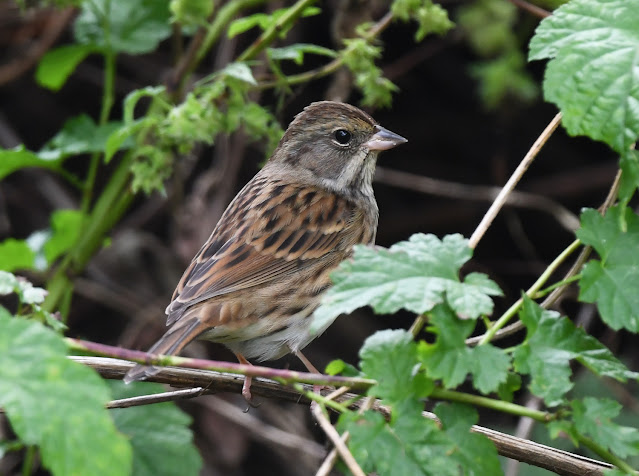 |
| Black-faced Bunting - Gangseo Wetland Eco-Park, Seoul-T'ukpyolshi, South Korea |
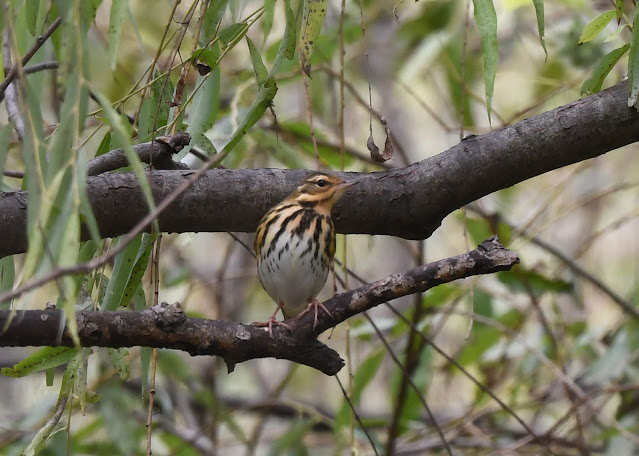 |
| Olive-backed Pipit - Gangseo Wetland Eco-Park, Seoul-T'ukpyolshi, South Korea |
It was around this time that the exhaustion from not really sleeping during our overnight flight was starting to catch up to Laura. While I was birding a mixed flock she was investigating the back of her eyelids while somehow staying upright. Impressive work!
The birding continued unabated and we added several lifers in short order. First up was a flock of handsome Yellow-billed Grosbeaks. A few minutes later we connected with a band of gregarious, noisy Vinous-throated Parrotbills. Laura's Bird Of The Day was secured when the parrotbills appeared.
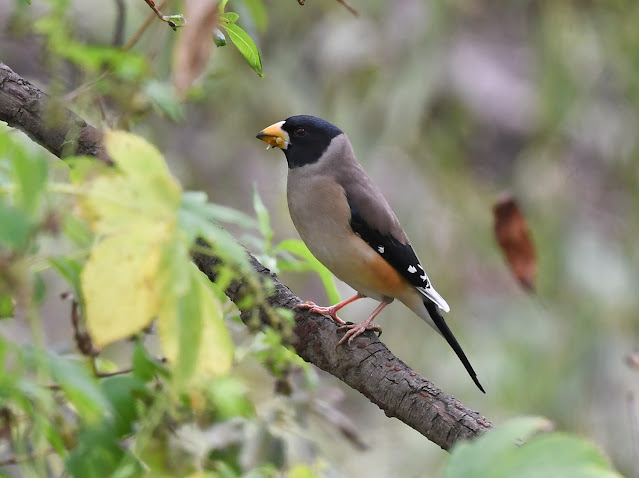 |
| Yellow-billed Grosbeak - Gangseo Wetland Eco-Park, Seoul-T'ukpyolshi, South Korea |
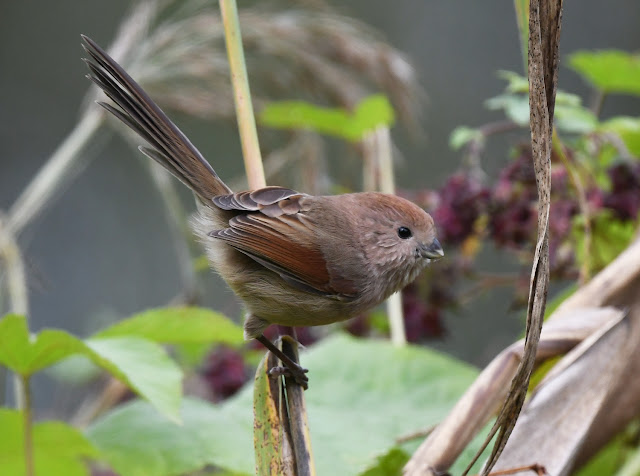 |
| Vinous-throated Parrotbill - Gangseo Wetland Eco-Park, Seoul-T'ukpyolshi, South Korea |
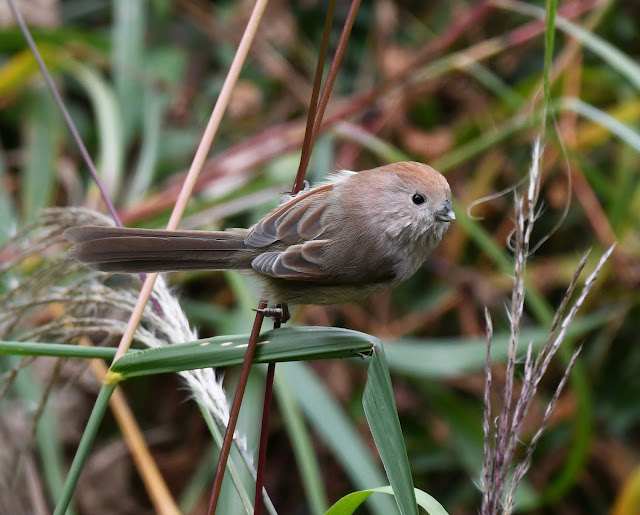 |
| Vinous-throated Parrotbill - Gangseo Wetland Eco-Park, Seoul-T'ukpyolshi, South Korea |
Two species of magpies reside in Seoul and they are both rather common and easy to find. Oriental Magpies were everywhere. We only found a handful of Azure-winged Magpies towards the end of our walk.
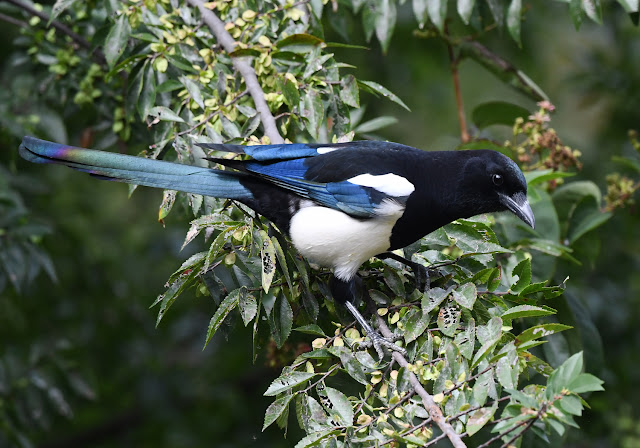 |
| Oriental Magpie - Gangseo Wetland Eco-Park, Seoul-T'ukpyolshi, South Korea |
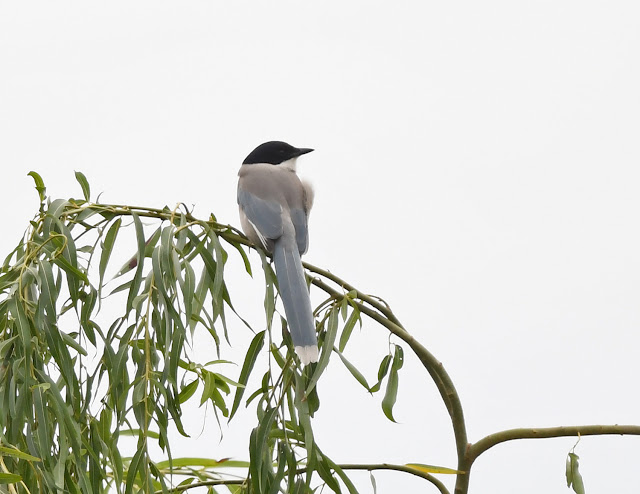 |
| Azure-winged Magpie - Gangseo Wetland Eco-Park, Seoul-T'ukpyolshi, South Korea |
Commotion at the side of the path grabbed our attention, and Laura noticed this female Ring-necked Pheasant trying to remain hidden in the low grasses.
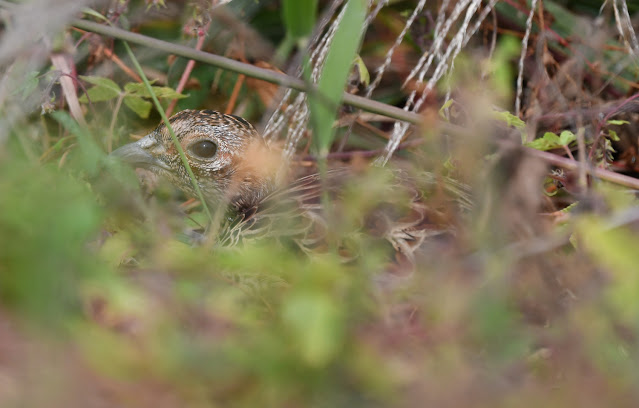 |
| Ring-necked Pheasant - Gangseo Wetland Eco-Park, Seoul-T'ukpyolshi, South Korea |
Another familiar species from back home. This is a Chinese Mantis, but here it is a native species.
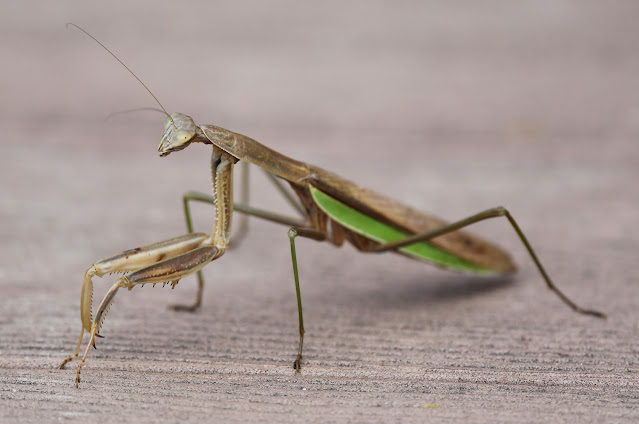 |
| Chinese Mantis (Tenodera sinensis) - Gangseo Wetland Eco-Park, Seoul-T'ukpyolshi, South Korea |
We picked through one final mixed flock near the end of our visit. This one was extra birdy as it also contained a Daurian Redstart and Mugimaki Flycatcher. Laura also had a very brief view of a thrush that was almost certainly Naumann's Thrush, but it vanished before we had confirmatory views.
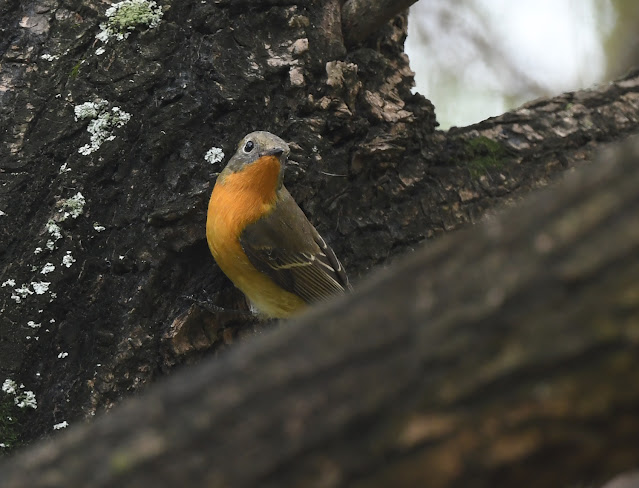 |
| Mugimaki Flycatcher - Gangseo Wetland Eco-Park, Seoul-T'ukpyolshi, South Korea |
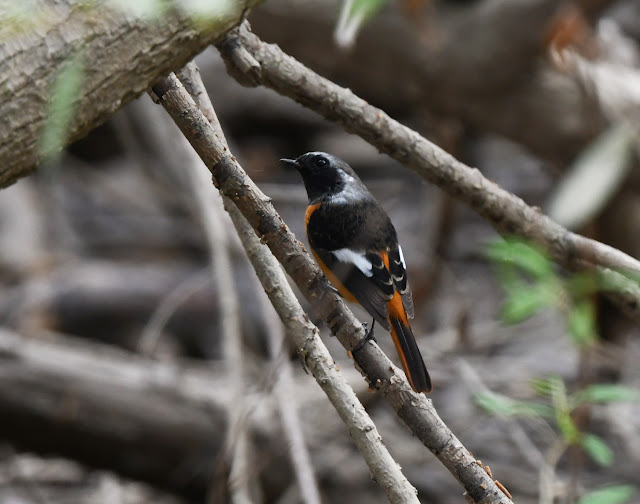 |
| Daurian Redstart - Gangseo Wetland Eco-Park, Seoul-T'ukpyolshi, South Korea |
We spent most of the day here, finally returning to the airport in the early afternoon. We didn't quite have enough time to make any more birding stops, but we added one final lifer with several Black-faced Spoonbills seen from the metro. All in all, an excellent way to spend the day. I am sure Laura and I will be back in South Korea in the future so that we can see more of what this beautiful country has to offer.