Friday, 3 July 2020

Canada Day BioBlitz

For the past several years, Colin Jones has been organizing a bioblitz that takes place on Canada Day. The first was created in 2017 as a celebration of Canada's biodiversity and it has become an annual event. 

What exactly is a bioblitz? It is an attempt by a group of people to collectively identify as many species as possible in a particular geographic area for a particular period of time. Usually they are set up as a 24 hour event and take place in a small area. Organized bioblitzes occur annually in numerous locales throughout Ontario (and across the world). This particular bioblitz was organized as a "project" through the website iNaturalist; any sighting of any species submitted for July 1 from anywhere in Canada would be added to the project, linked to here. 

I decided to give it a shot this year and see how many species I could document and upload to iNaturalist. Obviously if trying to find a high total number of species in just one day, a particular strategy is needed. Personally, I focused on plants and insects. The diversity of both of these groups is just so high that you are wasting valuable time if you are trying to photograph "big game" like vertebrates. I planned on setting up my moth sheet late on June 30 and staying until the wee hours of the morning. After a well-deserved rest, I would do a bit of botany during the day and set up the sheet again for more mothing the next night. 

My chosen location for the first night was FWR Dickson Wilderness Area located about 13 minutes from home in North Dumfries Township. My friends Todd and Kathryn joined for the evening and we had a blast!

The "best" moth of the night was this one, identified as Lobesia bicinctana. It is an uncommon species with most of its few records from northeast North America. I can't find any other photos of this species from Ontario, and this is only the second record on iNaturalist for Canada.

Lobesia bicinctana - FWR Dickson Wilderness Area, Waterloo Region


Some of the first insects to appear on the sheet each evening are caddisflies. Most of them are small, rather nondescript and almost impossible to identify (for me, at least). But some of the Giant Casemaker Caddisflies (Phryganeidae) can be figured out relatively easily. These organisms spend most of their lives in the substrate of streams and other waterbodies, only living for a short time as the adult form.

Limnephilus ornatus - FWR Dickson Wilderness Area, Waterloo Region


Banksiola crotchi - FWR Dickson Wilderness Area, Waterloo Region


Macrostemum zebratum - FWR Dickson Wilderness Area, Waterloo Region


Mayflies are another group that live for only a short time as the winged adult form. 

Callibaetus ferrugineus (tentative ID) - FWR Dickson Wilderness Area, Waterloo Region


One of my favourite families of moths is the Notodontidae, commonly called Prominents. Many species are adorned with crazy shapes and colours and a few interesting ones dropped in for the evening.

Black-rimmed Prominent (Pheosia rimosa) - FWR Dickson Wilderness Area, Waterloo Region


Unicorn Prominents look a git gaudy when on the sheet, but when placed on a tree trunk they are practically invisible.

Unicorn Prominent (Schizura unicornis) - FWR Dickson Wilderness Area, Waterloo Region


Mottled Prominent (Macrurocampa marthesia) - FWR Dickson Wilderness Area, Waterloo Region


Elegant Prominent (Pheosidia elegans) - FWR Dickson Wilderness Area, Waterloo Region


While none of the big fancy silkmoths decided to show this evening, there was an abundance of other flashy moths such as these pictured next. 

Spiny Oak-slug Moth (Euclea delphinii) - FWR Dickson Wilderness Area, Waterloo Region


Green Leuconycta (Leuconycta diphteroides) - FWR Dickson Wilderness Area, Waterloo Region


Joyful Virbia (Virbia laeta) - FWR Dickson Wilderness Area, Waterloo Region


Yellow-necked Caterpillar Moth (Datana ministra) - FWR Dickson Wilderness Area, Waterloo Region


Rose Hooktip (Oreta rosea) - FWR Dickson Wilderness Area, Waterloo Region


While the bigger moths are great and all, it is the small "micromoths" that will really blow your mind. Having a macro lens allows a glimpse into this fascinating world. The patterns and colours of some of these species are just mindblowing! 

Argyresthia oreasella - FWR Dickson Wilderness Area, Waterloo Region


Pubitelphusa latifasciella - FWR Dickson Wilderness Area, Waterloo Region


Epicallima argenticinctella - FWR Dickson Wilderness Area, Waterloo Region


Mompha eloisella - FWR Dickson Wilderness Area, Waterloo Region


Gracillaria syringella - FWR Dickson Wilderness Area, Waterloo Region


Petrophila bifascialis - FWR Dickson Wilderness Area, Waterloo Region


Coleophora trifolii - FWR Dickson Wilderness Area, Waterloo Region


Four-lined Leafroller (Argyrotaenia quadrifasciana) - FWR Dickson Wilderness Area, Waterloo Region


Decantha boreasella - FWR Dickson Wilderness Area, Waterloo Region


Sphinx Moths (Sphingidae) were represented by three species, all of which seem to be pretty common in my (limited) experience - Twin-spotted, Small-eyed, and Northern Pine. 

Small-eyed Sphinx (Paonias myops) and Splendid Dagger (Acronicta superans) - FWR Dickson Wilderness Area, Waterloo Region


Northern Pine Sphinx (Lapara bombycoides) - FWR Dickson Wilderness Area, Waterloo Region


Some moths hold their wings in unusual positions when at rest, most likely to assist with camouflage among their leafy or woody environments. The wings are actually normally shaped when flying. I caught this Brown Scoopwing before it furled its wings, an unusual look at this normally distinctive type of moth. 

Brown Scoopwing (Calledapteryx dryopterata) - FWR Dickson Wilderness Area, Waterloo Region


A few more of the strange-shaped moths!

Dimorphic Tosale (Tosale oviplagalis) - FWR Dickson Wilderness Area, Waterloo Region


Plain Plume Moth (Hellinsia homodactylus) - FWR Dickson Wilderness Area, Waterloo Region


Grape Plume Moth (Geina periscelidactylus) - FWR Dickson Wilderness Area, Waterloo Region


This Spotted Apatelodes Moth really looks superficially like a Sphinx Moth but it is in fact in the family Apatelodidae. I was super stoked to see this one as it is a somewhat uncommon species that is found in the Carolinian Zone and a new one for me.

Spotted Apatelodes Moth (Apatelodes torrefacta) - FWR Dickson Wilderness Area, Waterloo Region


Since this was a bioblitz after all (and not just a mothblitz) I made sure to try to photograph everything else on the sheet, especially anything that stood out due to its unique pattern. I believe this awesome dude is a Four-spotted Fungus Beetle (Ischyrus quadripunctatus).

Ischyrus quadripunctatus - FWR Dickson Wilderness Area, Waterloo Region


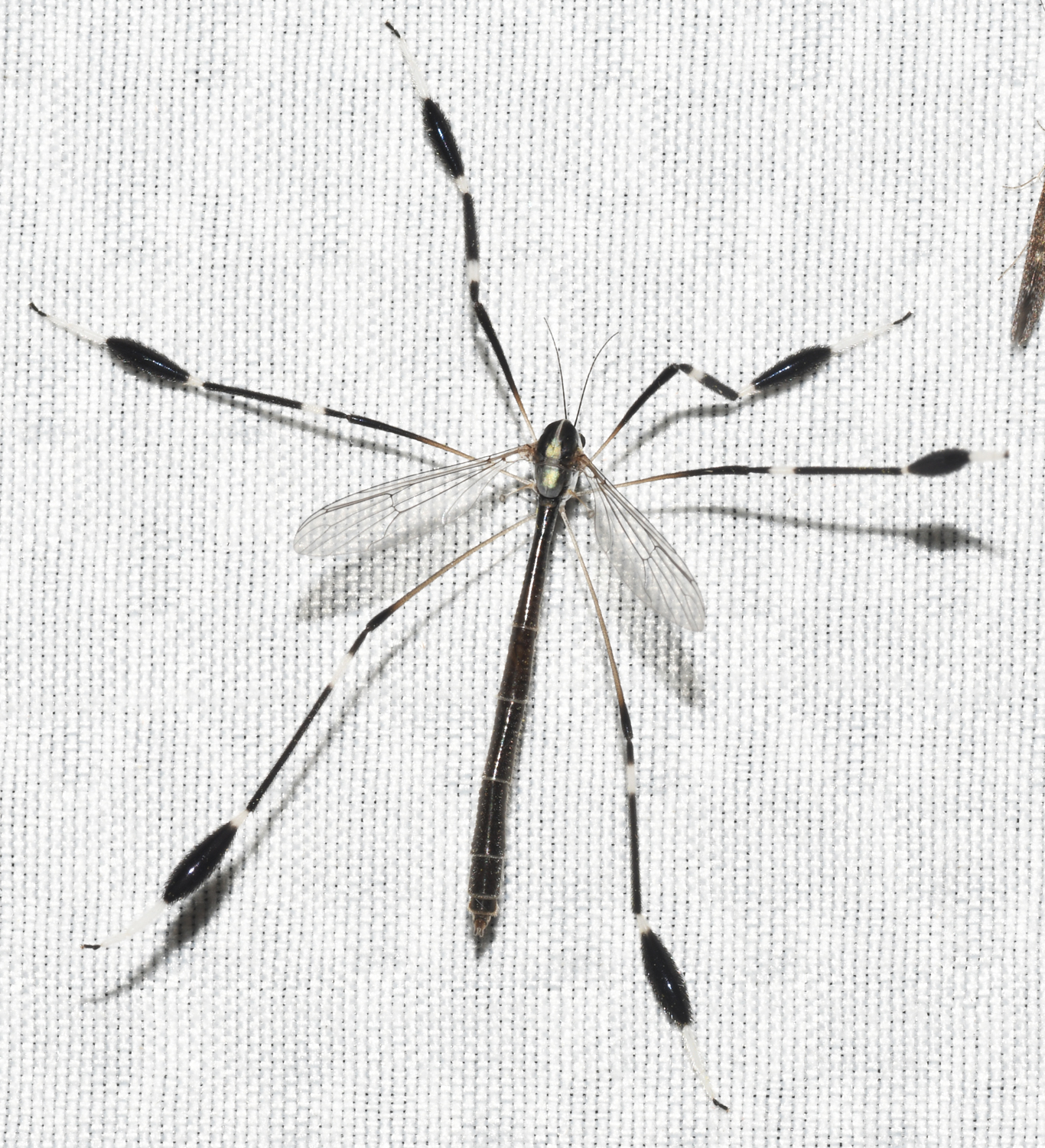
Eastern Phantom Crane Fly (Bittacomorpha clavipes) - FWR Dickson Wilderness Area, Waterloo Region


Peltodytes edentulus - FWR Dickson Wilderness Area, Waterloo Region


Chrysops vittatus - FWR Dickson Wilderness Area, Waterloo Region


Some organisms, like this cool hopper (genus Scaphoideus) I was unable to get down to species.
 
Scaphoideus sp. - FWR Dickson Wilderness Area, North Dumfries, Waterloo Region


Below are a few more random organisms that found themselves on or near the sheet at some point during the night. 

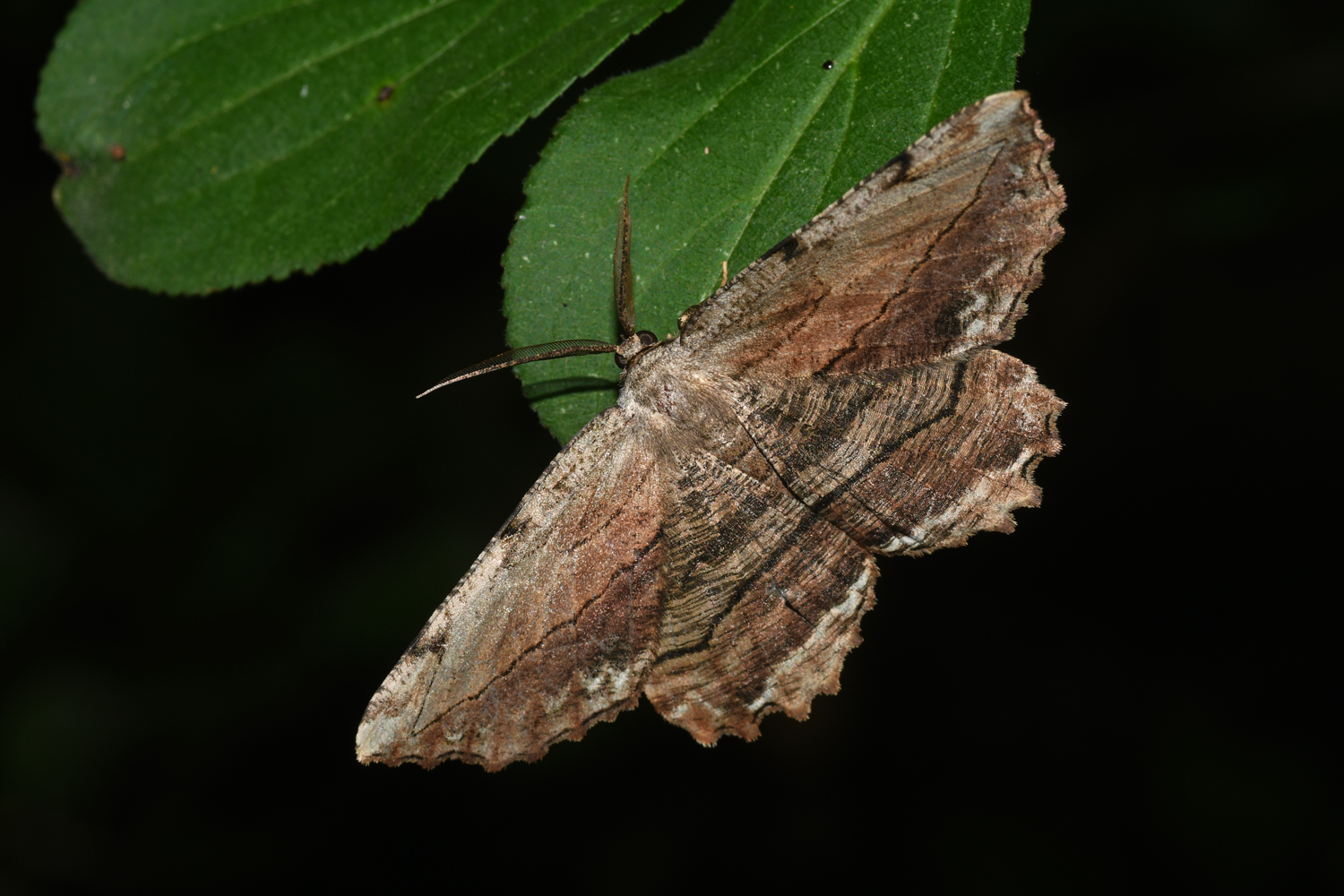
Common Lytrosis Moth (Lytrosis unitaria) - FWR Dickson Wilderness Area, Waterloo Region


Four-lined Plant Bug (Poecilocapsus lineatus) - FWR Dickson Wilderness Area, Waterloo Region


Olethreutes quadrifidium - FWR Dickson Wilderness Area, Waterloo Region


Saddled Leafhopper (Colladonus clitellarius) - FWR Dickson Wilderness Area, Waterloo Region


Cydia pomonella - FWR Dickson Wilderness Area, Waterloo Region


Banasa calva - FWR Dickson Wilderness Area, Waterloo Region


Glyptocera consobrinella - FWR Dickson Wilderness Area, Waterloo Region


Erioptera venusta - FWR Dickson Wilderness Area, Waterloo Region


Chrysopa oculata - FWR Dickson Wilderness Area, Waterloo Region


Beggar Moth (Eubaphe mendica) - FWR Dickson Wilderness Area, Waterloo Region


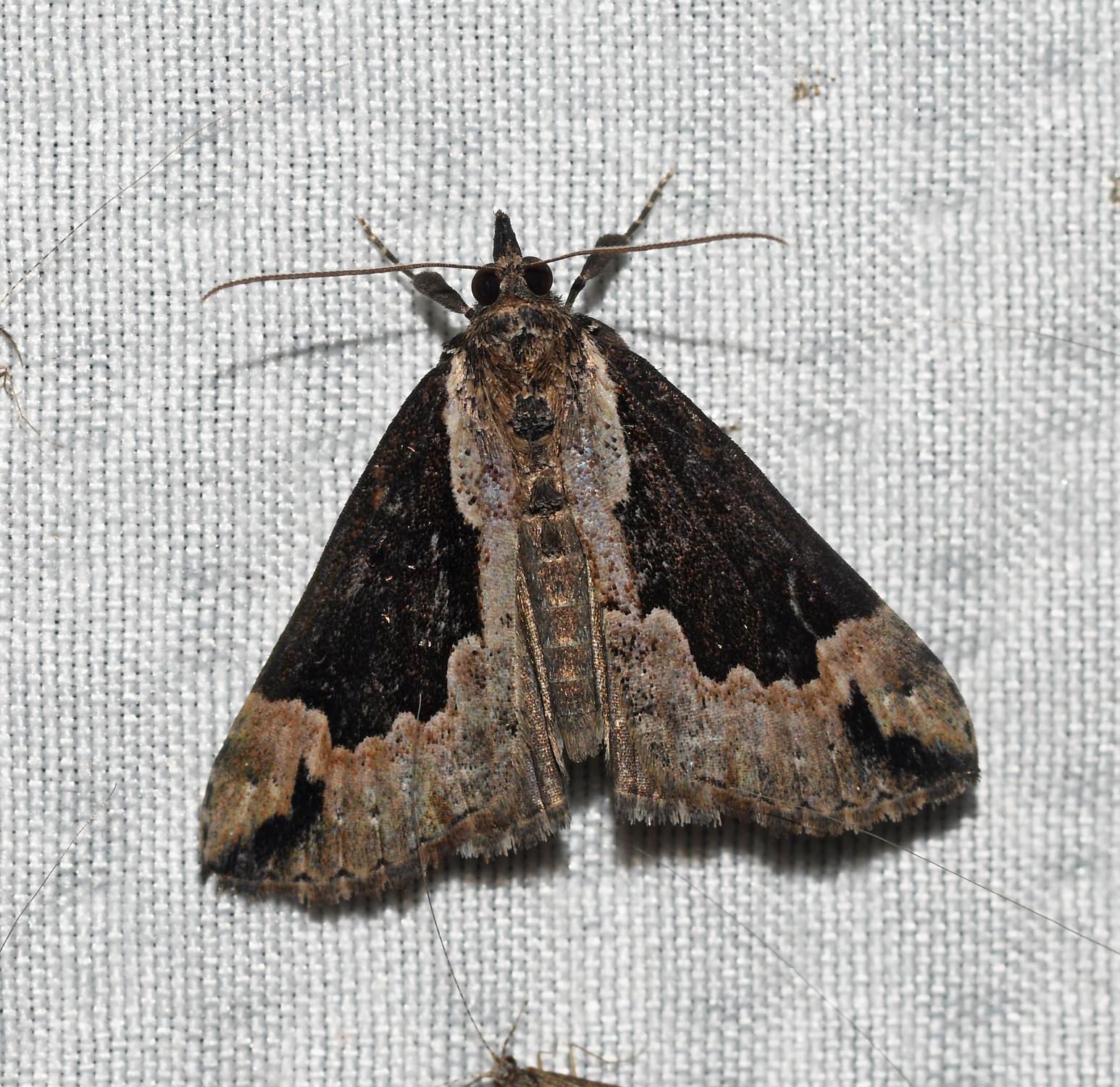
Baltimore Snout (Hypena baltimoralis) - FWR Dickson Wilderness Area, Waterloo Region


Finally at around 2 AM I called it a night and packed up the sheet. When it was all said and done I had photographed over 150 species, including around 130 moth species - not a bad start!

I ended up relaxing at home for a good chunk of Canada Day, taking advantage of the hot and sunny conditions to spend time around the pool (life is tough). Finally around 5 PM I drove back to Dickson. This time I was hoping to add a bunch of plant species, as well as whatever other incidental things I could find. The temperature was still high but at least the sun was at a lower angle upon my arrival.


Dioctria hyalipennis - FWR Dickson Wilderness Area, Waterloo Region


Since time was of the essence I focused on the low hanging fruit - those plant species that are common and widespread and impossible to miss.


Dame's Rocket (Hesperis matronalis) - FWR Dickson Wilderness Area, Waterloo Region


Red Maple (Acer rubrum) - FWR Dickson Wilderness Area, Waterloo Region


Alsike Clover (Trifolium hybridum) - FWR Dickson Wilderness Area, Waterloo Region


Bigtooth Aspen (Populus grandidentata) - FWR Dickson Wilderness Area, Waterloo Region


Bladder Campion (Silene vulgaris) - FWR Dickson Wilderness Area, Waterloo Region


Tamarack (Larix laricina) - FWR Dickson Wilderness Area, Waterloo Region


I added several butterflies here including Northern Crecent, Appalachian Brown, Silver-spotted Skipper and Northern Pearly-Eye as well as four species of dragonflies in the late afternoon shadows.


Silver-spotted Skipper (Epargyreus clarus) - FWR Dickson Wilderness Area, Waterloo Region


Northern Pearly-Eye (Lethe anthedon) - FWR Dickson Wilderness Area, Waterloo Region


My vertebrate tally for the bioblitz was pretty weak since my attention was focused elsewhere. I only documented two mammal species - some howling coyotes after dark, and this Eastern Chipmunk. 

Eastern Chipmunk - FWR Dickson Wilderness Area, Waterloo Region


I documented about 20 bird species out of the 50 or so that I saw or heard - with most, I recorded them but I also photographed a few. The "best" bird that I came across was probably a begging juvenile Long-eared Owl heard late at night, while I also heard a few cuckoos which is quite expected given the exceptional numbers of them around this summer. A vocalizing Barred Owl missed the cutoff by literally sixty seconds after midnight!

Gray Catbird - FWR Dickson Wilderness Area, Waterloo Region


I drove to nearby Sudden Tract at around 8 PM, giving me about an hour or so for more naturalizing fun before it was time to set up the moth sheet. I boosted my plant list during that time. I also made sure to record some more birds such as Scarlet Tanager, Wood Thrush, Rose-breasted Grosbeak, etc. But the main event was the mothing (of course). 

As much fun as it was at Dickson the previous evening, this night at Sudden Tract blew it out of the water. The diversity was just insane and lots of really unique species showed up at the sheet. That included quite a few new ones for me (20+). It is pretty crazy that I am still adding this many new ones each time out. Moth diversity, I'm telling ya....

First up are some of my favourites from the evening. 

Bog Glyph (Deltote bellicula) - Sudden Tract, Waterloo Region


Telamona sp. - Sudden Tract, Waterloo Region


Buck's Plum Moth (Geina buscki) - Sudden Tract, Waterloo Region


Pink-shaded Fern Moth (Callopistria mollissima) - Sudden Tract, Waterloo Region


White Eulithis Moth (Eulithis explanata) - Sudden Tract, Waterloo Region


This rarely reported species is called Sparganothis flavibasana and there are very few good photos of it online. At least two individuals were on the sheet!

Sparganothis flavibasana - Sudden Tract, Waterloo Region


Oak Beauty (Phaeoura quernaria) - Sudden Tract, Waterloo Region


Harris's Three-Spot (Harrisimemna trisignata) - Sudden Tract, Waterloo Region


Blurry-patched Nola Moth (Nola cilicoides) - Sudden Tract, Waterloo Region


Straight-lined Looper (Pseudeva purpurigera) - Sudden Tract, Waterloo Region


Orange-tufted Oneida Moth (Oneida lunulalis) - Sudden Tract, Waterloo Region


Saw-Wing (Euchlaena serrata) - Sudden Tract, Waterloo Region


Canadian Owlet (Calyptra canadensis) - Sudden Tract, Waterloo Region


It was a particularly good night for slug moths, of which five species were noted. 

Yellow-shouldered Slug Moth (Lithacodes fasciola) - Sudden Tract, Waterloo Region


Yellow-collared Slug Moth (Apoda y-inversum) - Sudden Tract, Waterloo Region


Two Polyphemus Moths appeared, one looking a lot fresher than the other.

Polyphemus Moth (Antheraea polyphemus) - Sudden Tract, Waterloo Region


Around 11 PM I went for a walk to the nearby boardwalk that passes through an alder swamp and cattail marsh. I was hoping to add a bunch of plants and other things to my list before the day was over. It was certainly a success and in the 30 minutes I left the sheet I probably added another 20 species.

Bristly Greenbrier (Smilax tamnoides) - Sudden Tract, Waterloo Region


Alder Sawfly (Eriocampa ovata) - Sudden Tract, Waterloo Region


Winterberry Holly (Ilex verticillata) - Sudden Tract, Waterloo Region


Appalachian Brown (Lethe appalachia) - Sudden Tract, Waterloo Region


Tall Meadow-Rue (Thalictrum pubescens) - Sudden Tract, Waterloo Region


The short foray to the boardwalk and back produced a few frog species. 

Gray Treefrog - Sudden Tract, Waterloo Region


Wood Frog - Sudden Tract, Waterloo Region


As the minutes ticked down I scoured the sheet and surrounding vegetation, adding a few new ones. Then the clock struck midnight and it was over!

Olethreutes merrickana - Sudden Tract, Waterloo Region


Sharp-lined Yellow (Sicya macularia) - Sudden Tract, Waterloo Region


Dircaea liturata - Sudden Tract, Waterloo Region


Linden Prominent (Ellida caniplaga) - Sudden Tract, Waterloo Region


Fruit-tree Leafroller (Archips argyrospila) - Sudden Tract, Waterloo Region


Dichrorampha bittana - Sudden Tract, Waterloo Region


Yellow-necked Caterpillar Moth (Datana ministra) - Sudden Tract, Waterloo Region


Because the mothing was so good I hung around for another two hours. This was a worthwhile choice since new species kept appearing. By far my favourite was my first ever Giant Leopard Moth!

Giant Leopard Moth (Hypercompe scribonia) - Sudden Tract, Waterloo RegionAdd caption


Giant Leopard Moth (Hypercompe scribonia) - Sudden Tract, Waterloo Region


And with that I called it a night. The bioblitz was a huge success and I am already looking forward to next year's. As of the time of this writing over 3800 species had been recorded collectively by over 2100 observers in Canada on July 1. A very good tally! Of those, I personally tallied between 320 and 330 species (I still need to upload some bird recordings), a number which I am pleased with considering I spent only 11 out of the 24 hours in the field. I wonder what is the upper limit that someone could document in a single day in Ontario. 500? 600? Higher even?

Tuesday, 9 June 2020

An American White Pelican Drops Into Waterloo

It has been a while since my last post. Generally, these sparse stretches occur when the "naturalizing" is at its peak, and it has been no different this time. However, now that spring bird migration is mostly over I will try to keep posting about Costa Rica, as well as a few of the fun finds from this spring in Ontario.

One of the more recent rarities to be found locally in Waterloo Region was an American White Pelican. This bird was discovered at Columbia Lake in Waterloo by Alison Boyd on Sunday afternoon. My friend Todd Hagedorn called me to give me the heads up, and so I drove up to Waterloo in the evening along with several other local and localish birders.

I arrived around 7 PM and immediately found the American White Pelican floating in the lake, surrounded by Canada Geese, and looking a little out of place! I ran into various other birders - twitching a bird is as much a social experience as it is a birding experience - and we all enjoyed the spectacular views of the pelican as the sun slunk lower in the sky behind us. It spent some time near a Common Merganser, also a species that shouldn't be in Waterloo in June!

American White Pelican and Common Merganser - Columbia Lake, Waterloo, Ontario

The American White Pelican is generally thought of as a prairie species, breeding in colonies in larger waterbodies. It then spends the winter months in California, the Gulf Coast, Florida, and points further south into Mexico and Central America. Historically, the Rainy River District and parts of Kenora District in northwestern Ontario were the best (and only) reliable locations to see this species in Ontario, but in recent decades it has steadily spread eastward. Now, American White Pelicans are common in the City of Thunder Bay, several of the larger lakes in Thunder Bay District, and even as far northeast as James Bay. Southern Ontario has seen an increase in the number of sightings as well; in the last few years there have even been some breeding colonies found in the islands of western Lake Erie. I would not be surprised if Lake Ontario eventually gets breeding American White Pelicans as well.

American White Pelican - Columbia Lake, Waterloo, Ontario


However, this bird represents only the second record of American White Pelican to be identified in Waterloo Region. The first record pertained to two birds flying over near Ayr, found by Brett Fried on November 2, 2016.

Fortunately for many other birders, the pelican decided to spend the night on Columbia Lake and it remained there all day Monday as well. There were some reports from earlier today (Tuesday), but it left by midday and has not been reported since.

American White Pelican - Columbia Lake, Waterloo, Ontario


It was a pretty fun quick twitch, and great to briefly catch up with some friends as well!

Saturday, 16 May 2020

A Ruff Few Days of Birding

This spring has certainly been an interesting one. It goes without saying that the Covid-19 pandemic has had a massive effect on society as a whole, but this has influenced the behaviour or birders and naturalists as well. With much less travelling and a focus on social isolation/birding from home, the data set of bird records from Spring 2020 will be much different in Ontario this year compared to a "typical" year when many people are spending weeks down at Rondeau, Long Point, and Point Pelee. Needless to say, there have been more than a few interesting birds found in people's yards or local patches!

In the last few weeks, talk of opening up the province has begun in earnest, and recently various parks and other open spaces may be legally visited again. On Friday, Rondeau Provincial Park opened for the first time all spring for passive use/birdwatching. In addition, the forecast called for interesting conditions with heavy nocturnal migration followed by bands of rain in the morning. There was potential for the f-word (fallout!). 

Bay-breasted Warbler - Rondeau PP, Chatham-Kent, Ontario

Laura and I rolled into Rondeau around 7:45 AM, shortly after a heavy wave of rain washed the park clean. Upon driving through the main gates, the songs of various warblers caught our ears and we excitedly thought about what the morning had in store. 

The birding was off the hook! We parked near the maintenance area and immediately began seeing birds, almost everywhere. Within the first 20 minutes we were already pushing close to 20 warbler species, including Mourning and Hooded Warblers (we finished with 26 warbler species for the day!). A Black-billed Cuckoo streaked across the path. Nearly every tree seemed to contain a Rose-breasted Grosbeak and a Least Flycatcher. We marvelled at all the newly arrived migrants, thrilled to be pointing our binoculars at something other than Yellow-rumped and Palm Warblers!

We worked our way to the maintenance circle and then walked the small trail that parallels a pond in the nearby woods. Here we found two nice birds - a singing Golden-winged Warbler, and an Acadian Flycatcher. I botched my photos, though! The trigger finger was a bit rusty...

Acadian Flycatcher - Rondeau PP, Chatham-Kent, Ontario

We next explored the campground and, following a tip from Quinten Wiegersma, locked onto a Sedge Wren in the campground. It was very birdy throughout this area and we found Canada and Wilson's Warbler, Olive-sided Flycatcher, Lincoln's Sparrow, Red-headed Woodpecker and more. Birds were everywhere!

Sedge Wren - Rondeau PP, Chatham-Kent, Ontario

Sedge Wren - Rondeau PP, Chatham-Kent, Ontario

The morning slowed down from here, as we made our way further south into the park towards the Visitor's Center. A single Prothonotary was singing beside one of the boardwalks along the Tulip Tree Trail, but otherwise it was dead in this part of the park. A Northern Ribbonsnake though was slithering in the leaf litter here, one of two we saw on the day.

Northern Ribbonsnake - Rondeau PP, Chatham-Kent, Ontario

The long-staying White-winged Dove was easily found along the main park road near "the pink cottage". This White-winged Dove has been seen at Rondeau on and off since May 2015, assuming it is indeed the same individual.

White-winged Dove - Rondeau PP, Chatham-Kent, Ontario

We birded the park for a bit more, but the rains came down again and we decided to head out with around 110 species under our belts. Before heading back to Cambridge, we checked out the very productive Thedford Sewage Lagoons near Lambton Shores which has excellent shorebird habitat at the moment. We joined Ken Burrell to scope the scene. (Note that if you plan on visiting these lagoons, do so after working hours since you may be kicked out otherwise). 

The birding was awesome and we had a blast sorting through all the birds. Ken had a few Long-billed Dowitchers mixed in with the Short-billed before we arrived, but I had no luck pulling one out. However, I spotted an adult Little Gull which was in immaculate breeding plumage. We soaked in amazing scope views. It even featured a pink flush to the breast, something I hadn't seen before in this species.

We also caught up with one of the breeding-plumaged Red Knots that James Holdsworth had found the previous day, also a stunning bird that we rarely get to enjoy in the spring. A Willet, some White-rumped Sandpipers, and a Semipalmated Sandpiper rounded out the highlights among hundreds of individual shorebirds. A great way to close out an excellent day!

Red Knot - Thedford Sewage Lagoons, Lambton, Ontario

Today, Laura and I headed back south, this time to Long Point Provincial Park. The forecast did not look as delicious and while there were new birds to look at, many had cleared out as well. In the morning we ran into a few familiar faces, but fortunately the provincial park is big enough that social distancing was not at all a problem! We birded with Dan Riley and his parents, Nancy and Garth for the morning.

We had few highlights in the park, though four Soras was a good count and I saw my first of year Willow Flycatcher and Eastern Wood-Pewee. Still, we finished with around 80 species including sixteen warblers.

Blue-headed Vireo - Long Point PP, Norfolk, Ontario

Next up was a quick spin through Old Cut. A late Golden-crowned Kinglet was singing from the conifers, while we enjoyed some of the common mid-May migrant species. Easily the highlight was a Eurasian Collared-Dove that streaked overhead, alongside a Mourning Dove. Awesome!

Our final stop of the day was going to be the Wilson's Tract to look for herps, butterflies, Louisiana Waterthrushes and Hooded Warblers. The Rileys were up ahead, followed by Dan in his vehicle, and Laura and I in my car. Near the north end of the causeway there are some mud flats and so we stopped our vehicles on the shoulder of the road to scope them. A 1st summer Little Gull was a highlight, along with some Dunlins and Semipalmated Plovers. 

Little Gull (left) - Long Point Causeway, Norfolk, Ontario

But the highlight of the day (of the spring thus far?) for us was yet to come. Garth got the rest of us on a funny looking shorebird flying past and heading away from us. It pulled up to an island, landed, and turned its head. We all immediately realized what the bird was. "A F****** RUFF!" I recall shouting, probably at the same time as the others. We watched the gorgeous Eurasian species strut his stuff on the mudflat and quickly made a few calls to some friends who were in the area. 

Ruff - Long Point Causeway, Norfolk, Ontario

Unfortunately the bird was too distant for good photos and it also kept disappearing on the far side of the island, out of view. A number of birders came by to check it out, perhaps 20 or 30 in total while we were there, and fortunately the Ruff "performed" well for everyone. 

Ruff is an unusual shorebird in which the species exhibits a lekking mating system, with three different plumages of males that use a variety of strategies to obtain mating opportunities at these communal leks. Dominant males will gather in small groups in their territories and perform an elaborate display, hoping to impress one of the rather plain-looking females nearby, erecting their ornamental head and neck feathers (their "ruff") which can be either black or chestnut/orange. Satellite males show a white ruff, and these individuals do not have their own territory - instead, they enter one of the dominant males territories and try to attract females here. The dominant males tolerate the satellite males, since the present of both of these types of males in a lek is more attractive to females. A third type of male resemble the females and try to "steal" copulations from the females when they are crouched down to solicit copulation from one of the dominant or satellite males. 

Ruff - Long Point Causeway, Norfolk, Ontario

Ruff is a very rare bird in Ontario with perhaps 2 or 3 reports annually. I am aware of four other records for the Long Point area/Norfolk County in total, including one from earlier this May which also had an orange ruff (it was not as bright or with as full of a ruff - maybe this is the same bird but further along in its breeding plumage?). We were pretty stoked to find one, and for it to be a bird with a full and elaborate chestnut ruff!

We finished our day at the Wilson Tract where we enjoyed Hooded Warblers and good conversation with friends, including Henrique and Hannah who joined us. It had been a beautiful spring day and it felt so good to be able to share it with some friends that we had not seen in a long time! Fortunately our hobby can easily be practiced with social distancing and I am looking forward to more similar outings in the future. 

Hooded Warbler - Wilson Tract, Norfolk, Niagara